Who is Antoni Gaudí: The genius behind Barcelona
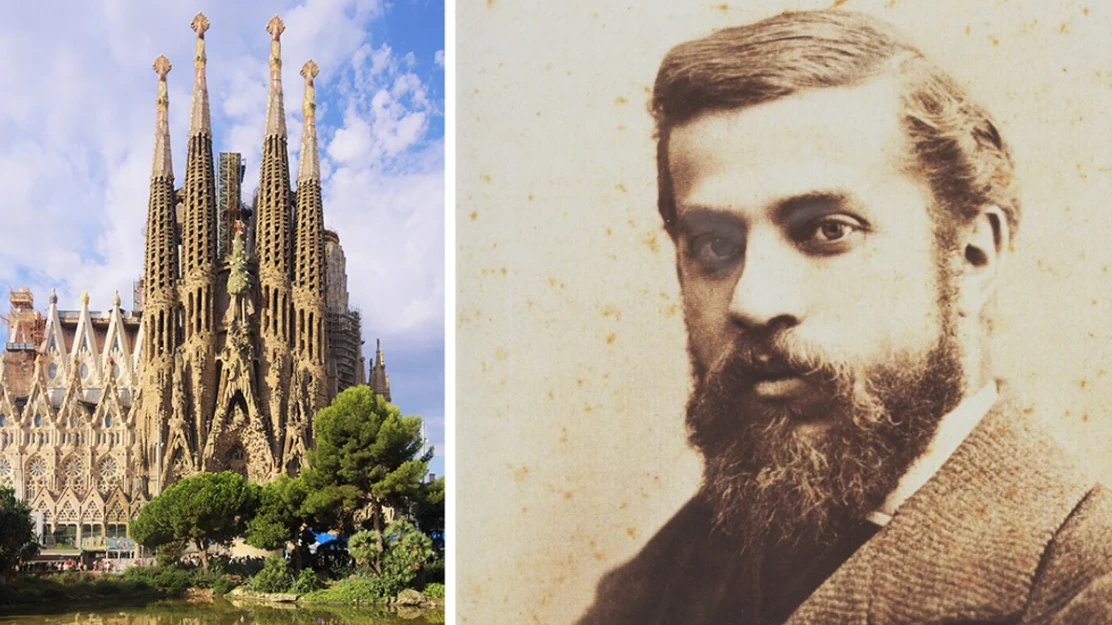
Antoni Gaudí was a renowned Catalan architect who designed imaginative buildings based on nature. Born in 1852, he developed an architectural style full of curving curves, vivid decorations and innovative structural ideas. His work is still one of the main reasons travellers, including many Australians, visit Barcelona today.
Gaudí’s most famous work is the Sagrada Família, but he also left a legacy of Park Güell, Casa Batlló and Casa Milà. For his period his designs were exceptional, combining architecture, engineering, art and nature in ways few architects had attempted before.
Who was Antoni Gaudí?
Antoni Gaudí i Cornet was born on 25 June 1852 in Catalonia. His family’s history in metallurgy introduced him to workmanship at an early age. He also paused to observe the natural environment around him.
These childhood experiences later influenced his architecture. Many of his designs were based on trees, vegetation, caves and other natural shapes. Gaudí didn’t merely replicate nature, he researched how natural structures worked and used similar ideas to his buildings.
Antoni Gaudí’s architecture
Gaudí studied architecture in Barcelona and qualified in 1878. His career developed through several important projects, while his professional relationship with industrialist Eusebi Güell gave him opportunities to explore ambitious ideas.
His style featured curved surfaces, unusual arches, colourful ceramics and detailed metalwork. Gaudí believed every part of a building could contribute to its overall design, from large structural columns to smaller doors and decorative features.
The Sagrada Família
The Sagrada Família became the most important project of Antoni Gaudí’s career. He joined the project in 1883 and gradually transformed its design. He eventually spent more than four decades working on the church.
From 1914 onwards, Gaudí focused entirely on the Sagrada Família. Its tall towers, detailed façades and tree-like interior columns reflect his interest in religion, geometry and nature. He knew the massive project would continue beyond his lifetime.
Park Güell and Casa Batlló
Gaudí’s genius may also be witnessed in the famed Park Güell. It mixes architecture and landscape, with strange columns, curving buildings and brilliant ceramic decorating. Today it is one of the most famous sights in Barcelona.
Casa Batlló is likewise a typical example of his style. It is differentiated from traditional buildings by the flowing façade, the distinctive balconies and the vivid surfaces. Inside, Gaudí paid a lot of attention to natural light, ventilation and circulation between areas.
Casa Milà
Casa Milà, commonly known as La Pedrera, is notable for its wave-like stone facade. Gaudí didn’t use straight façades like they did conventionally, but curved them to make the structure look more natural.
Its roof is also unusual. Chimneys and ventilation structures were converted into sculptural aspects, demonstrating Gaudí’s ability to integrate functional architectural elements into the overall artistic design.
Antoni Gaudí’s personal life
Gaudí became more reclusive as he grew older, and never married. Religion was vital to him, particularly in his latter life, when he was working on the Sagrada Família.
His life-style grew simpler too. He spent much of his efforts on his architecture and religion, not fame. In 2025, the Catholic Church declared Gaudí Venerable.
How did Antoni Gaudí die?
On 7 June 1926, Gaudí was struck by a tram in Barcelona. He suffered serious injuries and died three days later, on 10 June 1926. He was 73 years old.
Large crowds attended his funeral, reflecting his importance to Barcelona. Gaudí was buried in the crypt of the Sagrada Família, permanently connecting him with his greatest architectural project.
Antoni Gaudí’s legacy
Seven properties associated with Gaudí are included in the UNESCO World Heritage listing known as the Works of Antoni Gaudí. They include Park Güell, Palau Güell, Casa Milà, Casa Vicens, Casa Batlló, the Crypt of Colònia Güell and parts of the Sagrada Família.
More than a century after his death, Antoni Gaudí remains one of architecture’s most recognisable figures. His creative use of nature, colour, geometry and craftsmanship changed Barcelona and left a legacy that continues to fascinate Australian travellers, architects and design lovers today.