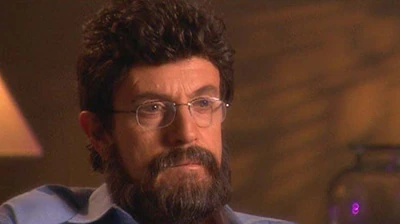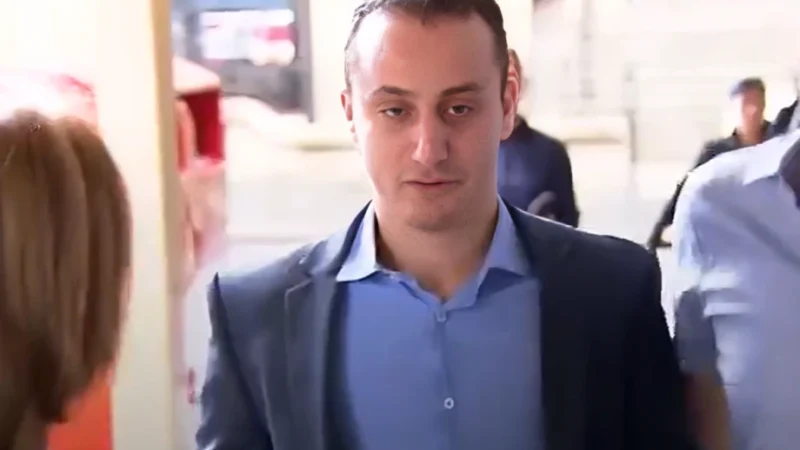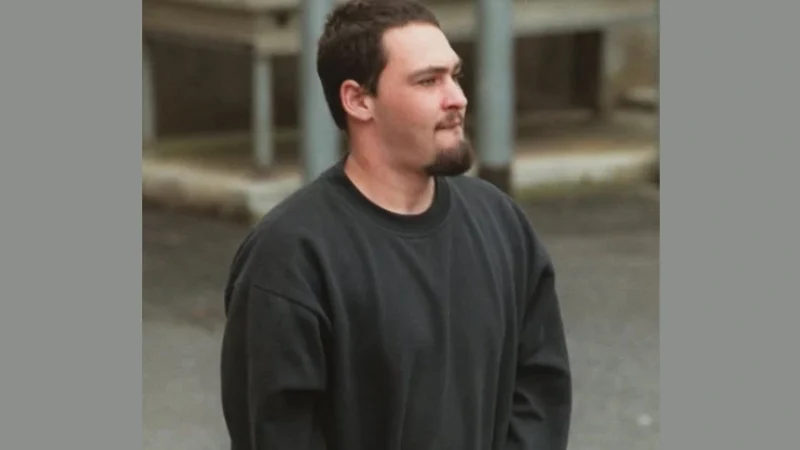
Chris Dawson: From rugby league star to convicted killer

Many Australians recognise the name Chris Dawson, not for his sporting accomplishments, but for his involvement in one of the country’s most high-profile criminal cases. Dawson was a former professional rugby league player who later became the focus of a decades-long investigation into the disappearance of his wife, Lynette Dawson. His final conviction in 2022 placed an end to a case that had tormented Australia for over 40 years.
Early life and rugby league career
Christopher Michael Dawson was born July 26, 1948, in Sydney, New South Wales, Australia. He had a modest professional rugby league career in the 1970s. Dawson played first-grade football for the Newtown Jets, earning more than 50 appearances.
He was a known face in rugby league circles but never a star. On retiring from the professional sport Dawson took up teaching physical education on Sydney’s Northern Beaches. This was the time when attention turned to his private life.
The disappearance of Lynette Dawson
Lynette Dawson vanished from her family home in Bayview, on Sydney’s Northern Beaches, in January 1982. She was 33 years old and a mother of two young daughters. Despite extensive searches and a public appeal, her body has never been found.
The case was unresolved for decades. Lynette Dawson died, and Chris Dawson was culpable, according to coroner inquests. Due to a lack of evidence, charges were not filed for several years.
It was to become one of Australia’s most widely discussed unsolved disappearances. There was a lot of interest, especially in New South Wales, where the story unfolded.
Renewed attention and arrest
The release of the investigative podcast The Teacher’s Pet in 2018 sparked renewed attention in the case. The podcast scrutinised witness testimony and facts, thereby reigniting public interest in the disappearance.
In December 2018, more than three decades after Lynette disappeared, Chris Dawson was taken into custody and formally accused of her murder. This news surprised many Australians, given that Lynette had been missing for more than 30 years.
Trial and Sentencing
The murder trial began at the Supreme Court of New South Wales in 2022. Dawson chose a judge-alone trial over a jury trial due to the high notoriety of the case.
In August 2022, Justice Ian Harrison found Chris Dawson guilty of Lynette Dawson’s murder on or around January 8, 1982. The court found that he murdered her and disposed of her corpse, albeit her remains were never discovered.
In December 2022, Dawson received a 24-year prison term, with a minimum of 18 years to be served before he can apply for parole. At his age, the sentence indicates that he is unlikely to be released until late in life.
After years of doubt and pain, Lynette’s family finally received justice.
Additional conviction
Chris Dawson was also convicted in 2023 of engaging in illegal sexual activity with a student while working as a teacher. The offence involved a relationship with a teenage girl in the early 1980s.
He was handed an extra three-year prison term for that offence, and it will be served at the same time as his murder sentence.
Appeals and current status
Chris Dawson, who was convicted of murder, filed an appeal, arguing that the passage of time and the loss of evidence had harmed the trial’s fairness. However, the New South Wales Court of Criminal Appeal denied his appeal in June 2024.
According to the most recent verifiable information he is still in jail in a correctional facility in New South Wales.
Impact on Australia
The Chris Dawson case has had a major impact on Australia’s legal and media scene. It discussed the possibility of cold cases being reopened years later, as well as the role that advances in investigative journalism and new witness testimony could play in legal proceedings.
The case also sparked renewed discussions on spousal abuse, abuse of power in schools and the lasting emotional damage on the families of missing persons.
But for many Australians, the narrative is about Lynette Dawson, a mother whose disappearance has left concerns unsolved for decades. Her body was never located but her conviction in 2022 gave her family some solace.
Conclusion
Chris Dawson’s narrative contains sharp contrasts. He began his rugby league career with Newtown in the 1970s but became a national icon after being convicted of murder in one of Australia’s most notorious cold cases.
More than 40 years after Lynette Dawson’s disappearance, the justice system has issued its conclusion. Despite multiple appeals, the conviction stands. It is a sharp reminder that accountability does not fade over time and that justice, even when delayed, can still be served in Australia.